
Why Weather and Proper Curing Time Matter for a Strong, Crack-Free Driveway
Temperature and curing control how strong and long-lasting a driveway will be. If the air is too hot, too cold, or too wet, fresh concrete can crack, scale, or dry out too fast. During any concrete driveway installation, the right temperature and proper curing time help the surface harden evenly and reach full strength.
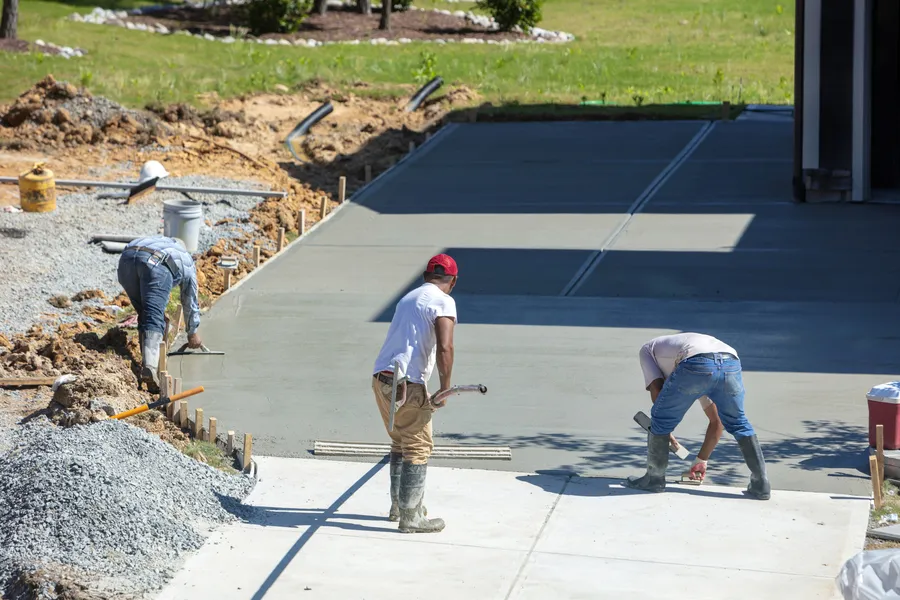
Quick Answer: What Temperature Is Best?
Concrete sets best when air and ground temperatures stay between 50°F and 85°F. In this range, the mix hardens at a steady pace. When it is colder than 40°F, the concrete can freeze before it gains strength. When it is hotter than 90°F, it can dry too quickly and form surface cracks.
Good curing means keeping the concrete moist and protected for at least seven days. This allows the cement in the mix to fully react with water and build strength.
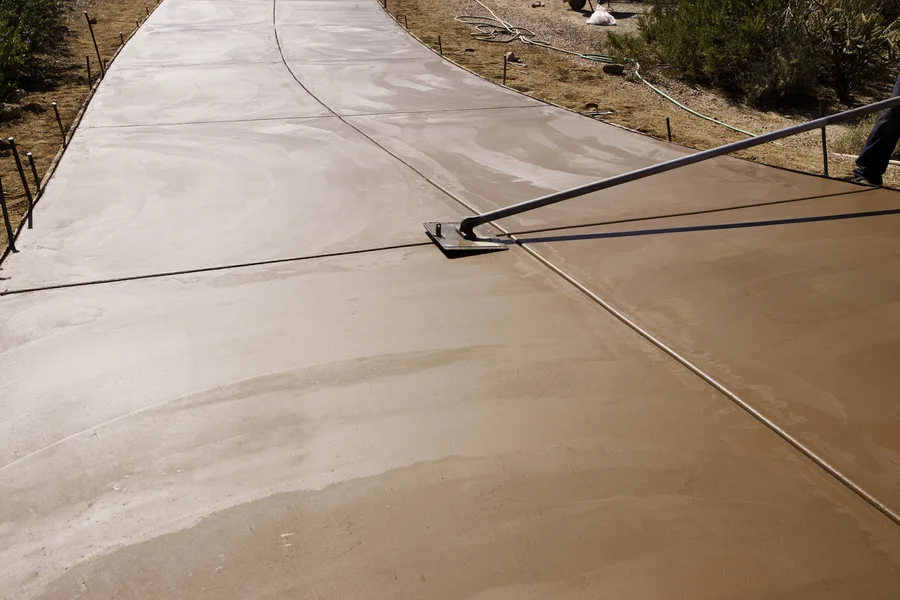
What You Need Before Starting
Before a concrete driveway installation begins, a few things should be checked:
- Air temperature during the day and at night
- Ground temperature below the surface
- Rain forecast for the next 48 hours
- Wind speed, which affects drying time
- Proper curing supplies like plastic sheeting or curing compound
The base under the driveway should also be compacted and dry. If the soil is frozen or soaked, the slab may shift after it hardens. This preparation step is just as important as the pour itself.
Step-by-Step: Temperature and Curing Process
Here is how professionals handle temperature and curing during a typical pour:
- Check the weather forecast for at least three days.
- Prepare and compact the base material.
- Pour and spread the concrete evenly.
- Finish the surface before it sets too hard.
- Apply a curing compound or cover with plastic.
- Keep the surface moist for about seven days.
- Avoid driving on it for at least one week.
In hot weather, crews may use sunshades or cool water to slow down drying. In cold weather, they may use insulated blankets to trap heat. These small steps make a big difference in final strength.
Common Mistakes to Avoid
One common mistake is pouring concrete in freezing weather without protection. Ice crystals can form inside the slab and weaken it from the start.
Another problem happens in extreme heat. The top layer can dry faster than the bottom. This creates shrinkage cracks. Spraying a fine mist of water or using curing blankets helps prevent this.
Some homeowners think concrete is fully cured in a day or two. It may feel hard, but it keeps gaining strength for weeks. Parking heavy vehicles too soon can cause dents or surface damage.
It is also a mistake to skip control joints. These planned cuts allow the slab to crack in straight lines instead of random spots.
When to Call a Professional
Small concrete projects can sometimes be handled by skilled homeowners. But a full concrete driveway installation often requires timing, equipment, and experience.
Call a professional if:
- Night temperatures may drop below 40°F
- Daytime heat stays above 90°F
- The driveway is large or sloped
- You are unsure how to cure the surface properly
Driveways are part of your larger service category keyword projects that affect both safety and curb appeal. Mistakes made during curing can shorten the life of the slab by many years. A trained crew knows how to adjust the mix and protect the surface based on the season.
Final Recommendation and Next Steps
If you are planning a new driveway in Monroe, NC, timing your project around mild weather will give you the best results. At Cruz Concrete Solution, we handle every concrete driveway installation with careful attention to temperature, timing, and curing methods. Our team monitors weather conditions and uses proven steps to help each slab gain full strength. Call us at (980) 317-8628 to schedule a consultation and learn how we can help protect your investment from day one.